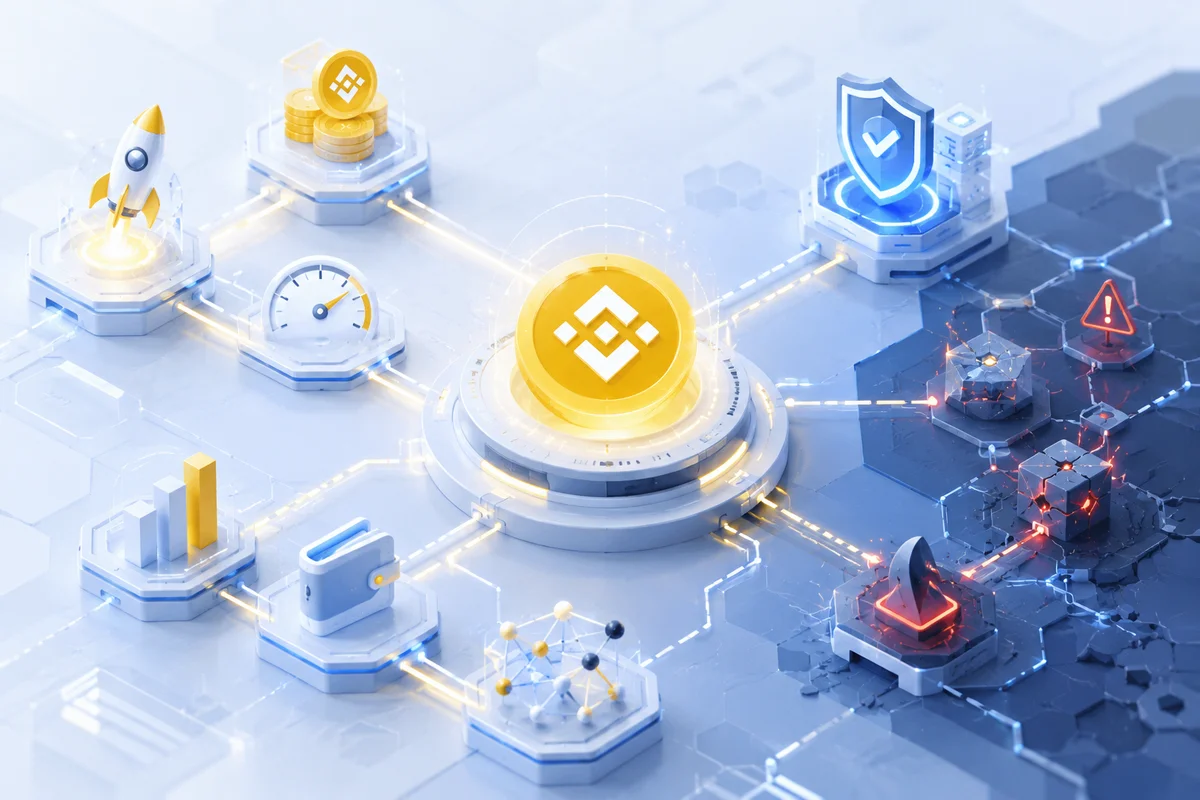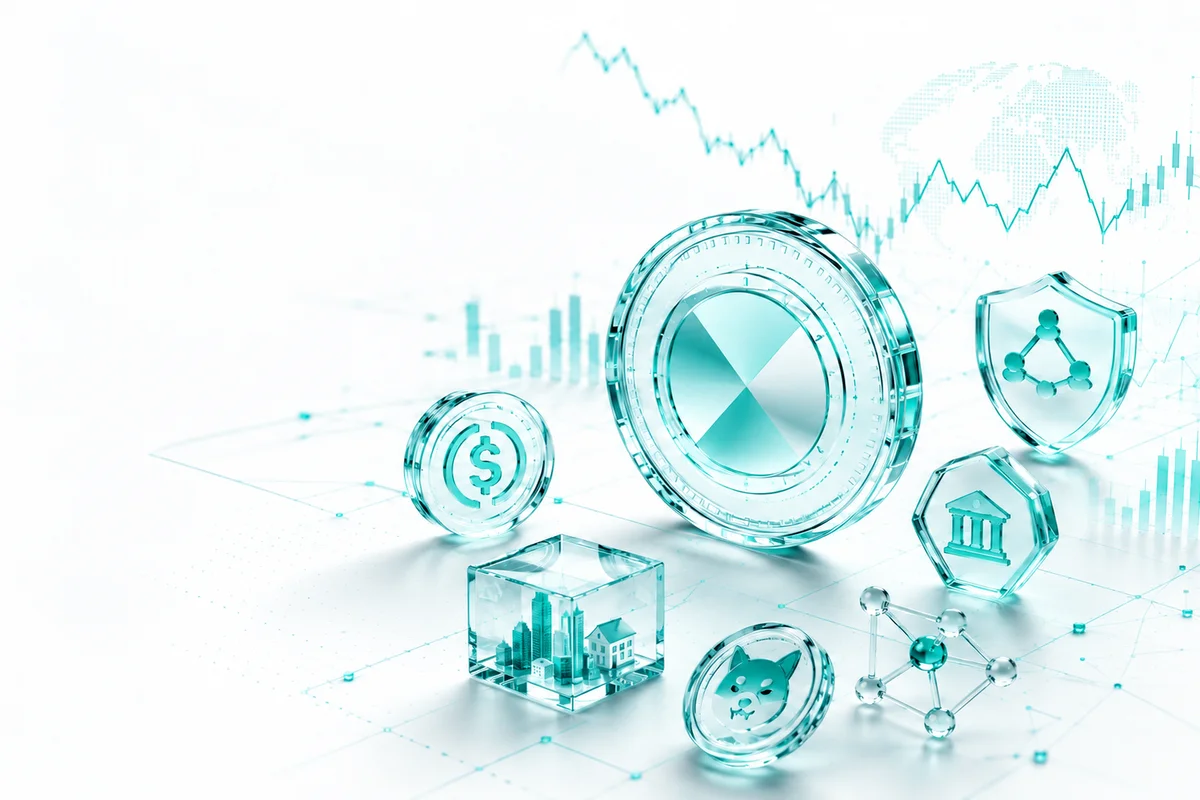
A token is a digital asset built on top of an existing blockchain network, such as Ethereum, BNB Chain, or Solana, rather than running on its own blockchain. Coins such as Bitcoin run their own network, while tokens follow smart contract standards set by another chain.
This article explains how tokens work, how they differ from coins, what the main categories are, and what risks you need to manage. If you are new to crypto, understanding this foundation will help you avoid expensive mistakes.
Key Points
- Token vs coin: Tokens usually do not have their own blockchain because they use an existing network.
- Smart contract rules: Tokens depend on standards such as ERC-20, BEP-20, or SPL.
- Different functions: Tokens can be used as payments, voting rights, stablecoins, or digital ownership.
- Higher risk: Small tokens can move sharply because of low liquidity and rug pulls.
- Research first: Check the use case, supply distribution, and trading volume before buying.
How a Token Works
A token is created through a smart contract that manages the name, total supply, transfer rules, and other technical settings. The contract lives on an existing blockchain, and every transfer is recorded there. This creates public visibility for holders and transaction history.
According to Ethereum.org in 2026, ERC-20 remains one of the most popular standards for creating fungible tokens on Ethereum. You can observe large holders and market sentiment through on-chain analysis.
Parts of a token you should watch:
• Total supply: The maximum amount or circulating amount can affect future inflation.
• Liquidity: The daily volume and order book depth decide how easily you can buy and sell.
• Holder distribution: Concentration in a few addresses can increase selling pressure.
Reading these parts can help you avoid tokens that look strong but cannot be sold when the market turns.
Token vs Coin: Key Differences
Coin and token are often used as if they mean the same thing. A coin runs its own blockchain, while a token uses infrastructure from another blockchain.
• Coin: It has its own network, such as Bitcoin or Ethereum.
• Token: This is built on an existing network, such as USDT, UNI, or LINK.
• Technical dependency: Token security depends on the host network and smart contract quality.
According to Crypto.com Research in June 2024, around 617 million people worldwide had owned cryptocurrency. This means many users interact with stablecoin and DeFi tokens, not only coins. Start by studying types of crypto before choosing which asset fits your strategy.
Main Token Categories You Should Understand
Tokens are not a single type of asset. Each category has its own trading logic.
1. Utility tokens: These give access to a product or service within a project ecosystem.
2. Governance tokens: These give voting rights in a protocol, such as UNI for Uniswap.
3. Stablecoins: These are pegged to stable assets, such as USDT and USDC.
4. Security tokens: These represent ownership of financial instruments, including tokenized stocks such as xStocks.
5. RWA tokens: These represent real assets like gold, real estate, or bonds.
6. Meme tokens: These are community and hype driven, often without clear use cases.
According to CoinGecko data from January 2025, more than 15,000 crypto tokens and coins are listed on its platform. This shows intense competition, so fundamental research matters more than following short-term trends.
According to CoinGecko data from January 2025, the market capitalization of USDT was above 130 billion U.S. dollars. This supports the role of stablecoins as the main liquidity bridge in crypto markets.
Core Functions of Tokens in Crypto
Tokens can do more than move with market sentiment. In a serious project, a token should support an actual product.
• Payment layer: Tokens are used to move value inside an ecosystem.
• Voting power: Governance tokens give holders a say in protocol changes.
• User incentives: Tokens reward users who supply liquidity or use services.
• Staking security: Many networks use locked tokens to secure the system and reward stakers.
Some users earn rewards by locking tokens through staking crypto. The yield is not fixed and carries the risk of token price decline.
Benefits of Tokens for Beginners
Tokens can be a useful way to learn how on-chain assets behave because their records are transparent. Real benefits depend on which token category and project you choose.
• Easy access: Tokens can be bought through digital asset trading platforms.
• Transparency: Transfer history is recorded on a public ledger.
• Broad range: You can choose stablecoins, utility tokens, or RWA tokens.
• Borderless movement: Tokens can move across countries without a traditional intermediary.
According to a McKinsey & Company study from 2024, tokenized assets could reach about 2 trillion U.S. dollars by 2030. This is why tokens are seen as more than a short-lived trend.
Major Risks to Watch Before Buying Tokens
The deadliest risk is usually found in tokens launched too quickly without transparency. These are the key risks for token holders.
• Low liquidity: A small order can push the price, and selling becomes hard during panic. Check daily volume and order depth first.
• Rug pull risk: Developers can drain liquidity and leave the token worthless. Confirm whether the code is audited and whether liquidity is locked.
• Smart contract bugs: A code flaw can freeze or drain user funds. Avoid putting your whole portfolio into unproven new contracts.
• Regulatory uncertainty: The same token can be treated as a security in one country and accepted in another. Learn the local rules before you invest.
Real-World Token Examples
Examples make the difference between categories easier to see. They are not recommendations, only learning tools.
• UNI: A governance token for Uniswap.
• USDT and USDC: Stablecoins often used as trading pairs.
• XAUT: A token that represents physical gold bars.
• LINK: A token used to bring external data to smart contracts.
Before choosing a token, compare its market size with major assets using largest assets. This helps you understand how large crypto is compared with gold or stocks.
How to Screen a Token Before Buying
Buying a token is not simply about predicting a price. Use a simple screening framework.
1. Identify the token category: Understand whether it is utility, governance, stablecoin, security, RWA, or meme.
2. Check market liquidity: The daily volume must be big enough for you to open and close a position.
3. Review tokenomics: Study total supply, vesting periods, and whale wallet concentration.
4. Monitor network activity: Look at active addresses and exchange flows through a block explorer.
5. Start with a small position: Keep early allocations small, especially when trading new tokens on Spot Trade.
Discipline during screening gives you a better chance of separating working products from pure hype.
Token Categories at a Glance
The same token can belong to several categories. Always read the latest project documents and local regulations.
Conclusion
Tokens are flexible digital assets, but that flexibility also creates complexity. Each type, from utility and stablecoin to RWA, has its own analysis framework and risk profile. Do not buy a token just because it rallied in a few days. Learn how to evaluate function, liquidity, tokenomics, and regulation before committing capital.
FAQ
Start with Mobee
Mobee is a digital asset platform licensed and supervised by OJK, helping users explore crypto and investment products with clearer access and practical learning. Start your investment journey through Mobee and choose products that match your goals and risk profile.