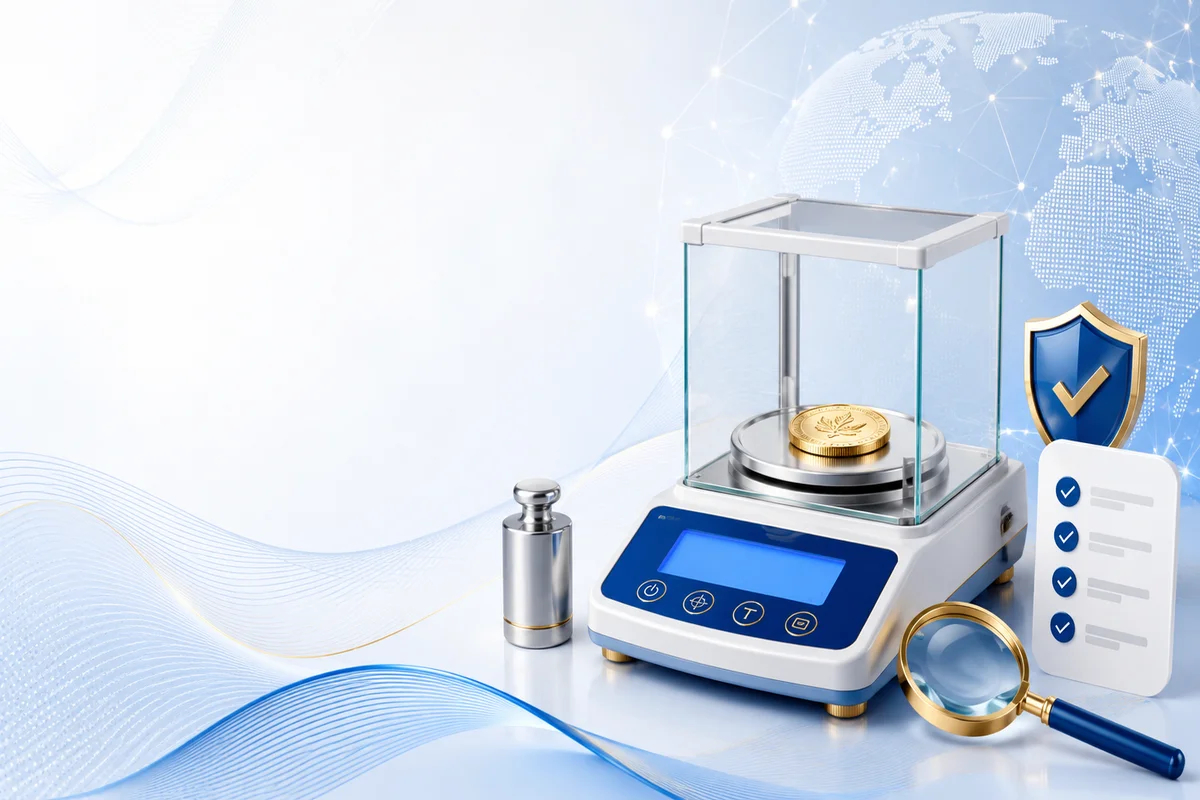
A digital gold scale is an electronic weighing device designed to measure the weight of gold with high precision, typically up to 0.01 grams or finer. It allows investors, jewelers, and collectors to verify the weight of gold bars, coins, or jewelry independently without visiting a gold shop. By using a digital scale, you can detect suspicious weight discrepancies that may indicate counterfeit or impure gold. However, the scale measures only weight, not purity, so it must be used together with other testing methods like specific gravity or acid tests.
Key Points
- Primary function: Digital gold scales measure gold weight accurately, usually with 0.01 g or 0.001 g resolution.
- Accuracy matters: High-precision scales help detect fake gold that deviates from standard weight.
- Not a purity tester: Scales only measure weight, not gold purity; additional testing is needed.
- Price range: Digital gold scales cost between $5 and $50, depending on capacity and precision.
- Regular calibration: Periodic calibration is necessary to maintain accuracy, especially with frequent use.
What Is a Digital Gold Scale
A digital gold scale is a specialized electronic device for weighing precious metals like gold and silver. Unlike ordinary kitchen scales, gold scales offer higher resolution and often include a tare function to subtract container weight. They are widely used by gold dealers, pawnshops, and retail investors for pre-transaction weight verification. According to a 2025 report by the International Gold Association, an estimated 65% of retail gold transactions globally involve some form of digital scale verification.
How Digital Gold Scales Work
Digital gold scales use a load cell or strain gauge sensor to measure weight. When gold is placed on the platform, the sensor generates an electrical signal converted into a weight reading on an LCD or LED display. This process takes 2-5 seconds depending on the model. Most modern scales feature auto-calibration and overload protection. Common capacities range from 200 g to 1000 g, with accuracies of 0.01 g for standard models and 0.001 g for lab-grade models. As of March 2026, specifications from brands like Tanita and American Weigh Scales show consumer models have a ±0.02 g error margin in the 0-100 g range.
Main Functions of a Digital Gold Scale
- Weight verification: Compare the measured weight to the certificate or stated weight.
- Discrepancy detection: Identify small differences that may indicate tampering or counterfeiting.
- Quality control: Used by dealers to ensure consistent product weight before sale.
- Negotiation tool: Provides objective data during price negotiations for buying or selling gold.
- Record keeping: Some scales feature Bluetooth to log weighing data automatically.
These functions make a digital scale essential for anyone actively trading gold.
Benefits of Using a Digital Gold Scale
- High accuracy: With 0.01 g resolution, you can detect weight differences worth as little as $0.05 per gram depending on the gold price.
- Portable and convenient: Most gold scales are compact and battery-powered, ideal for on-the-go use.
- Cost savings: Avoid frequent trips to jewelers for weight checks; a one-time purchase covers years of use.
- Transparency: Both buyer and seller share the same weight data, reducing disputes.
- Extra features: Many models offer backlit displays, low-battery indicators, and multiple units (g, oz, dwt).
Risks and Limitations
- No purity measurement: A scale only gives weight. Fake gold with heavy fillers can pass if not tested further.
- Accuracy drift: Load cell sensors can shift over time or after impacts, requiring periodic recalibration.
- Environmental sensitivity: Extreme temperatures, humidity, or air currents can affect high-precision readings.
- Limited capacity: Most consumer scales max out at 200 g, unsuitable for large gold bars.
- Variable quality: Cheap scales under $10 may have poor accuracy and short lifespan, leading to unreliable results.
To mitigate these risks, buy from reputable brands and cross-check with a calibrated scale at a gold shop periodically.
How to Choose the Right Digital Gold Scale
Consider the following factors:
• Resolution: Choose 0.01 g for general needs, 0.001 g if you weigh small items like 0.5 g gold pieces.
• Capacity: Match your typical gold size. For 100 g bars, a minimum 200 g capacity is recommended.
• Calibration: Opt for scales that support external calibration using standard weights.
• Durability: Prefer models with common batteries (AA or lithium) and avoid proprietary ones.
• Additional features: Clear display, tare function, and auto-off enhance usability.
• Warranty and support: Look for at least a 1-year warranty and accessible service centers.
Example: Verifying a 5g Antam Gold Bar
Suppose you purchase a 5 g Antam gold bar with a certificate stating 5.000 g. Using a 0.01 g digital scale, you measure 4.98 g. The 0.02 g difference is within the standard factory tolerance of ±0.05 g. However, if the reading is 4.80 g, it raises suspicion and requires further investigation. This demonstrates how a scale serves as a first-line verification tool before purchase decisions.
Comparison Table of Digital Gold Scale Specifications
Conclusion
A digital gold scale is a practical and affordable tool for independently verifying gold weight. With accuracy down to 0.01 g, it helps detect potential weight fraud, though it cannot replace purity testing. Choosing the right scale with appropriate resolution and capacity, along with regular calibration, ensures reliable performance. As a gold investor, owning a scale gives you confidence and transparency in every transaction.
FAQ
Start with Mobee
Mobee is a digital asset platform licensed and supervised by OJK, helping users explore crypto and investment products with clearer access and practical learning. Start your investment journey through Mobee and choose products that match your goals and risk profile.