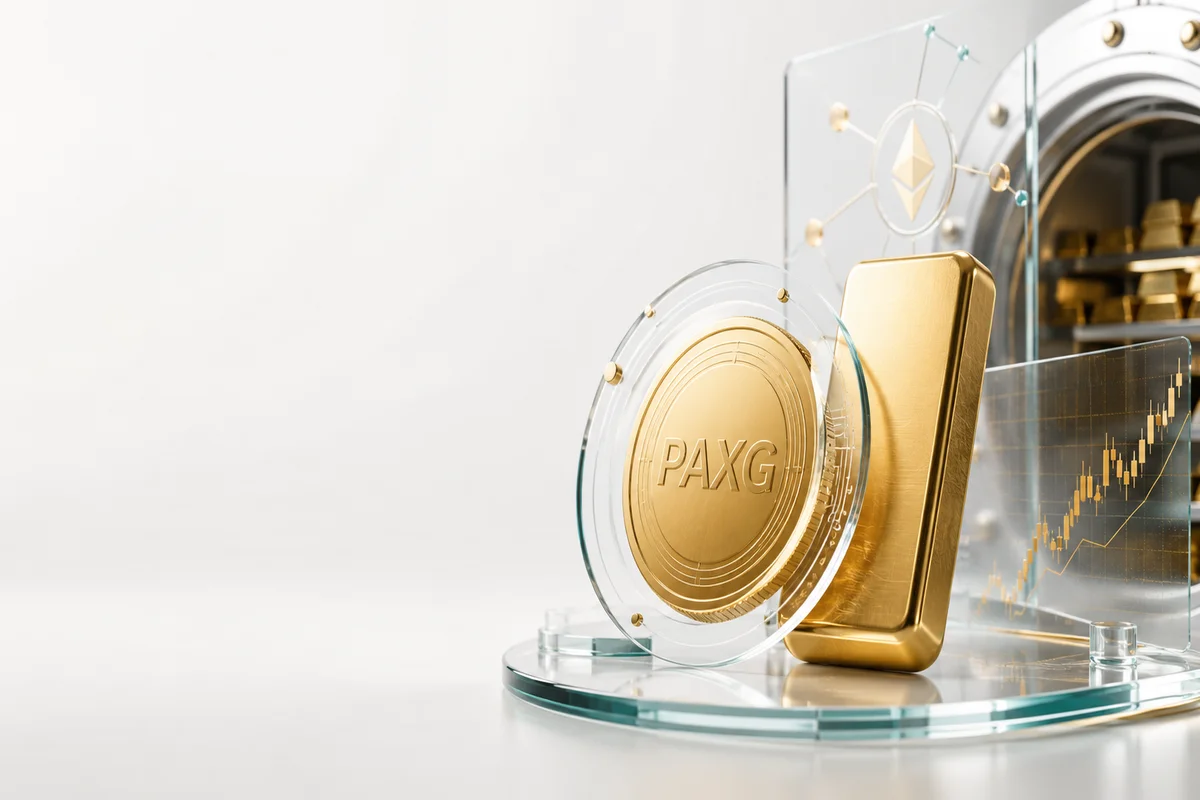
PAX Gold (PAXG) is a tokenized physical gold asset issued by Paxos. Each token represents one troy ounce of physical gold held in third-party vaults, while transactions run on the Ethereum blockchain. The product is designed to give investors a way to hold gold exposure without dealing with complex logistics.
However, PAXG should not be confused with a pure stablecoin or a meme asset because its movement follows the gold spot price. You still face issuer risk, smart contract risk, liquidity risk, and regulation risk, so review the structure carefully.
Key Points
- Trusted issuer: Paxos launched PAXG in 2019 as a tokenized physical gold product.
- Reserved gold: One PAXG represents one troy ounce of gold held in Brink's vaults.
- Ethereum token: PAXG is an ERC-20 token, making transfers possible 24/7.
- Core benefit: The token combines gold price exposure with blockchain efficiency.
- Main caveat: Issuer, regulatory, liquidity, and smart contract risks still exist.
What Is PAX Gold?
PAX Gold is the product name, and its token is called PAXG. One PAXG represents a claim over physical gold bars that meet the London Good Delivery standard. According to Paxos documentation published in 2019, the backing ratio is one token for one fine troy ounce.
This means PAXG should track the global gold spot price instead of moving like a typical altcoin. Check trading crypto guidelines to understand spreads and secondary market behavior, because exchange prices can still deviate from the spot gold price. The main difference from a fiat stablecoin is that PAXG uses physical gold as its underlying asset rather than cash reserves.
How Does PAXG Work?
PAXG works through a custody process that connects physical metal to an Ethereum token. Here is the basic flow.
1. Gold audit: Approved participants deposit gold with custodial partners, and Paxos verifies the amount before issuing new tokens.
2. Token creation: Once gold meets the standard, PAXG is minted through the ERC-20 contract and delivered to the owner's wallet.
3. Digital transfer: The holder can send PAXG to any Ethereum address without physically moving gold.
4. Redemption process: Qualified parties can exchange tokens for physical gold or cash through Paxos. Retail investors usually sell PAXG back on exchanges.
This flow shows why holders do not need a private vault. However, buyers still rely on Paxos as the administrator. If you want to study token distribution and transaction flows, on-chain analysis provides useful data, but it cannot confirm the quality of the physical gold behind every token.
Main Uses of PAXG in a Portfolio
PAXG is not just a gold price proxy. It works as a tokenized commodity that can be moved or used across different applications.
• Portfolio hedge: Gold often behaves differently from stocks and crypto, which can smooth out volatility during market stress.
• Borderless transfer: PAXG enables gold exposure to move quickly between wallets without expensive freight.
• Fractional ownership: The ERC-20 standard allows each token to split into 18 decimal places, so investors do not need to buy a full bar.
• DeFi collateral: Some protocols accept PAXG as collateral in lending or borrowing applications.
• Lower logistics: Investors can avoid physical storage concerns when the market is supported by a reliable custodian.
If you are new to digital assets, study the categories that match your risk profile. You can start by learning the difference among crypto types, because gold-backed tokens have different mechanics from utility coins or meme assets.
PAXG vs Physical Gold vs Gold ETF
Investors often compare PAXG with physical gold or a popular product like SPDR Gold Shares (GLD). All three provide gold exposure, but their legal structure and practical risks are different.
Another similar product is the XAUT token, but issuer terms and liquidity differ. Here is a practical comparison.
Important Facts and Data About PAX Gold
These baseline facts help you evaluate whether PAXG suits your portfolio. Verify the latest details on official sources because rules and disclosures can change.
• Launch year: According to Paxos documentation published in 2019, PAXG was launched as a token using physical gold reserves.
• Token standard: Based on the PAXG contract listed on Etherscan, the token follows the ERC-20 protocol on Ethereum.
• Gold weight: One PAXG represents one troy ounce of gold, which equals about 31.1 grams.
• Custody location: Paxos states that the underlying gold is stored in Brink's vaults, not in its own offices.
• Issuance rule: New PAXG tokens are created only after the matching gold amount exists, which prevents unbacked supply.
Key Risks to Understand Before Buying PAXG
A gold label does not remove digital asset risks. Differentiate gold market risk from product risk before you commit.
• Issuer risk: Paxos controls the records, so mismanagement or insolvency could complicate claims. Mitigation: use a regulated platform that evaluates issuers and read the custody agreement.
• Smart contract risk: A bug in the Ethereum contract could affect transfers or ownership records. Check the official contract address and audit reports.
• Liquidity risk: PAXG trading volume is often smaller than BTC and ETH, so spreads can widen during panic. Place limit orders and avoid huge market orders.
• Regulatory risk: Regulators may classify gold-backed crypto differently in each country. New listing rules can reduce access or change tax treatment.
• Redemption uncertainty: Retail holders usually cannot request a full gold bar because redemption has eligibility and fee conditions. Understand exchange withdrawal constraints first.
How to Read PAX Gold Price Moves
To analyze PAXG properly, separate the gold trend from token-specific liquidity. Here are practical signals.
• Watch gold benchmarks: Compare PAXG with the LBMA Gold Price or other spot gold references.
• Track real yields: Gold usually struggles when real yields are high and benefits when they move lower.
• Monitor central bank demand: According to World Gold Council data for 2022, central banks bought about 1,136 tons of gold, a record annual total in recent history. This supports the long-term gold narrative.
• Check premium or discount: If PAXG trades far above spot, verify liquidity and withdrawal constraints; if it trades below spot, weak demand or low liquidity may be the cause.
Before You Buy PAXG: A Quick Checklist
Use this checklist to reduce operational mistakes when buying or storing PAXG.
1. Verify address: Confirm the official Paxos contract on Etherscan before sending any money.
2. Compare spread: If the selling price is far above spot, wait or check another venue.
3. Confirm chain: PAXG lives on Ethereum, so confirm the network before withdrawal.
4. Review liquidity: Low volume creates harsh slippage during big orders.
5. Check tax status: Understand local rules for digital assets before filing or trading.
Start with clear operational knowledge by reading Mobee tutorials. After that, you can use Spot Trade if you want to practice on assets that are available on the platform.
Conclusion
PAX Gold gives you an efficient way to hold gold exposure on a blockchain, including lower logistics and 24/7 transferability. But the word gold-backed does not mean risk-free. Issuer risk, smart contract risk, liquidity risk, redemption constraints, and regulation require serious attention. See PAXG as a strategic tool, not as a guaranteed digital version of physical bullion. Do your own research before deploying large capital.
FAQ
Start with Mobee
Mobee is a digital asset platform licensed and supervised by OJK, helping users explore crypto and investment products with clearer access and practical learning. Start your investment journey through Mobee and choose products that match your goals and risk profile.