

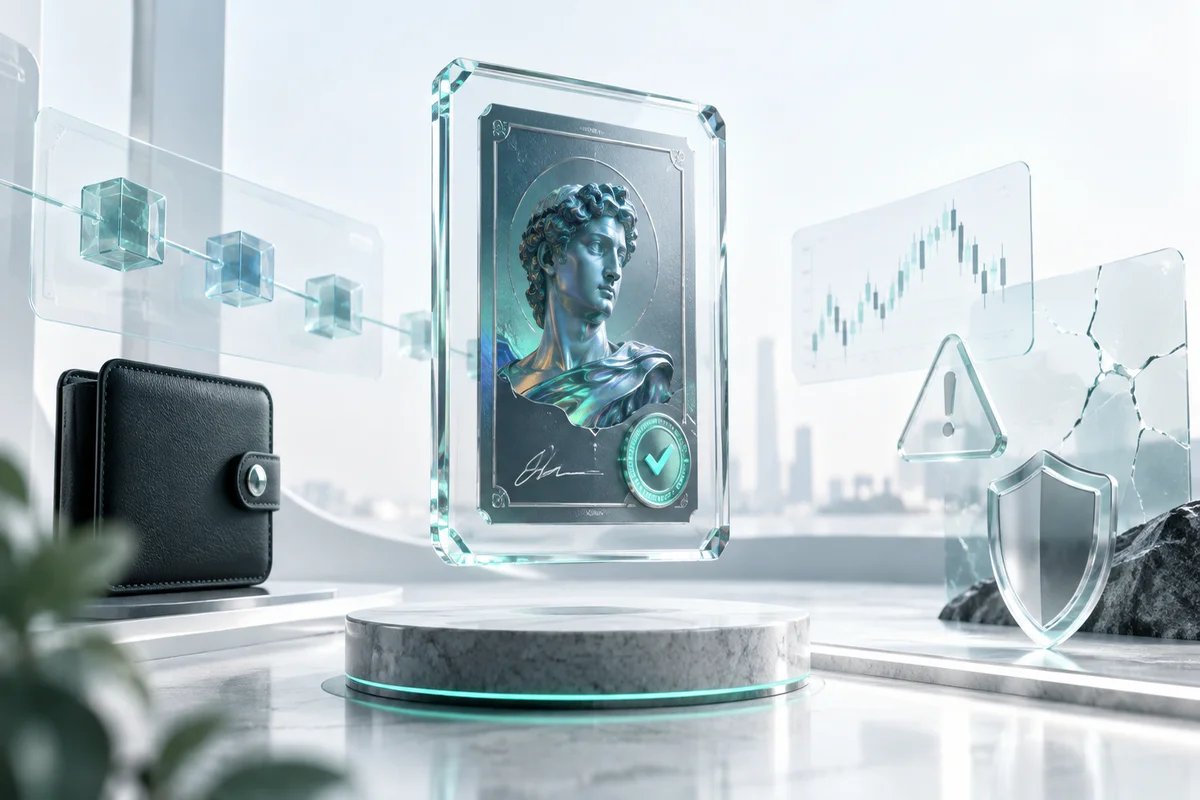
NFT is a unique digital token recorded on a blockchain that proves ownership of a digital or physical asset. Unlike Bitcoin, where each unit is identical and interchangeable, every NFT has a distinct identity. In 2026, NFTs have moved beyond profile pictures into event tickets, community memberships, game items, and real-world asset representation.
Understanding NFTs means understanding how blockchain records ownership, not just how floor prices move. Start with a clear primer on NFT investing so hype does not drive your decision.
Key Points
- Unique tokens: NFTs prove ownership of digital assets through transparent and verifiable blockchain records.
- Technical standards: ERC-721 and ERC-1155 remain the foundation for most Ethereum-based NFT collections.
- Community-driven value: NFT prices depend on scarcity, creator reputation, utility, and market liquidity.
- Liquidity risk: Many NFT collections are hard to sell quickly without a large discount when demand falls.
- Regulation and tax: NFT trading follows crypto asset rules in Indonesia and requires monitoring updates.
Why Some NFTs Are Valuable
NFT prices form from a mix of scarcity, reputation, and market demand. Unlike stocks that generate earnings and dividends, NFTs often rely on community narratives. As a result, valuation is more subjective and sensitive to sentiment.
According to CryptoSlam April 2026, the top 10 collections accounted for about 48% of monthly NFT volume. Liquidity is highly concentrated, which makes smaller collections harder to sell.
• Scarcity: Limited supply and holder count shape perceived value.
• Creator reputation: Creators with a strong track record attract serious collectors.
• Utility: Community access, royalties, or future benefits can add value.
• Liquidity: Volume and order book depth determine how easily an NFT trades.
• Market sentiment: Crypto cycles and macro news can lift or crush prices.
For example, blue-chip NFTs can stay liquid even during a downturn. New collections without active holders often lose buyers within days. Before looking at floor price, check volume and holder data.
Major Risks Buyers Often Ignore
NFT risk is not only price decline. There are technical, fraud, and regulatory risks that can make an asset impossible to sell or transfer. According to Chainalysis March 2026, wash trading still affects volume in some NFT collections, so headline volume can be misleading. Verify on-chain data before buying.
• Liquidity risk: Many NFTs have no fast buyer; set limit prices and monitor volume.
• Fraud risk: Phishing and fake mints can drain wallets; verify contracts before buying.
• Smart contract risk: Bugs or exploits can be triggered; choose audited collections.
• Regulatory risk: Tax and legal rules can change; record transactions and follow official sources.
• Sentiment risk: Prices can fall 70-90% from peak when hype fades; use small position sizes.
A common example is a phishing victim who signs a malicious transaction. In such cases, NFTs can move within seconds and cannot be reversed. Reduce risk by using a separate wallet and avoiding random mint links. For an extreme market case study, read about most expensive NFTs.
How to Evaluate an NFT Collection
NFT evaluation requires a mix of on-chain data, community quality, and clear utility. Do not rely only on artwork or social media follower count. Use this simple framework to make decisions more measurable. For real-world asset context, study asset tokenization.
1. Check the contract: Confirm the official contract address is verified on an explorer.
2. Review liquidity: Look at 24-hour volume, holder count, and price spread.
3. Evaluate community: Observe discussion quality, creator activity, and roadmap.
4. Test utility: Make sure there is real benefit beyond a profile picture.
5. Calculate costs: Include gas fees, royalties, and taxes before buying.
According to NFTGo February 2026, active unique NFT owners were around 4.3 million addresses. However, only about 12% transacted more than once per month. This suggests many holders are passive, so liquidity can dry up quickly when the market turns.
Fees, Liquidity, and Tax Basics in Indonesia
NFT transaction costs can be larger than they appear. Beyond the purchase price, there are gas fees, royalties, and potential taxes on sale. Liquidity also determines how fast you can exit without a large discount. Review crypto asset rules through official updates before trading.
• Gas fees: Ethereum network fees can swing sharply when demand is high.
• Royalties: Marketplaces may take 2.5-10% from secondary sales.
• Taxes: Crypto asset transactions in Indonesia are subject to income tax and VAT under rules applicable in 2026.
• Liquidity: Blue-chip collections are generally more liquid than new collections without volume.
• Marketplace: Volume share can shift between platforms and affect costs.
Based on OpenSea and Blur Q1 2026 data, Blur handled about 60% of Ethereum NFT volume in that quarter. This dominance shapes how traders view liquidity, but it also creates dependence on one platform. Indonesian users should verify the latest tax rules before reporting transactions.
Quick Table: NFT Signals and Risks
This table summarizes positive signals, main risks, and data to monitor.
This table helps you compare collections quickly. Do not rely on a single column, because NFT decisions require a mix of signals.
Practical Strategy for Beginners
Beginners should treat NFTs as experimental assets, not the core of a portfolio. Focus on utility, liquidity, and wallet security. With disciplined sizing, risk can be contained even when the market is uncertain.
• Start small: Allocate money you can afford to lose and avoid leverage.
• Focus on utility: Choose NFTs with clear functions such as tickets or membership.
• Diversify: Do not put your entire portfolio into one collection.
• Record transactions: Keep purchase records for tax reporting.
• Exit gradually: Set sell targets and do not wait until liquidity disappears.
A common rule is to cap NFT exposure at 1-2% of a crypto portfolio. If prices fall, losses do not erase core assets. If prices rise, you still hold exposure to community upside.
Conclusion
NFTs are digital ownership proofs that open many use cases in 2026, from identity and tickets to gaming and asset tokenization. However, NFT value depends heavily on liquidity, community, and real utility. Fraud, smart contract, and regulatory risks remain significant, especially for beginners buying on hype. Use on-chain data, limit position size, and verify the latest tax rules before trading.
FAQ
Start with Mobee
Mobee is a digital asset platform licensed and supervised by OJK, helping users explore crypto and investment products with clearer access and practical learning. Start your investment journey through Mobee and choose products that match your goals and risk profile.

.jpg)


