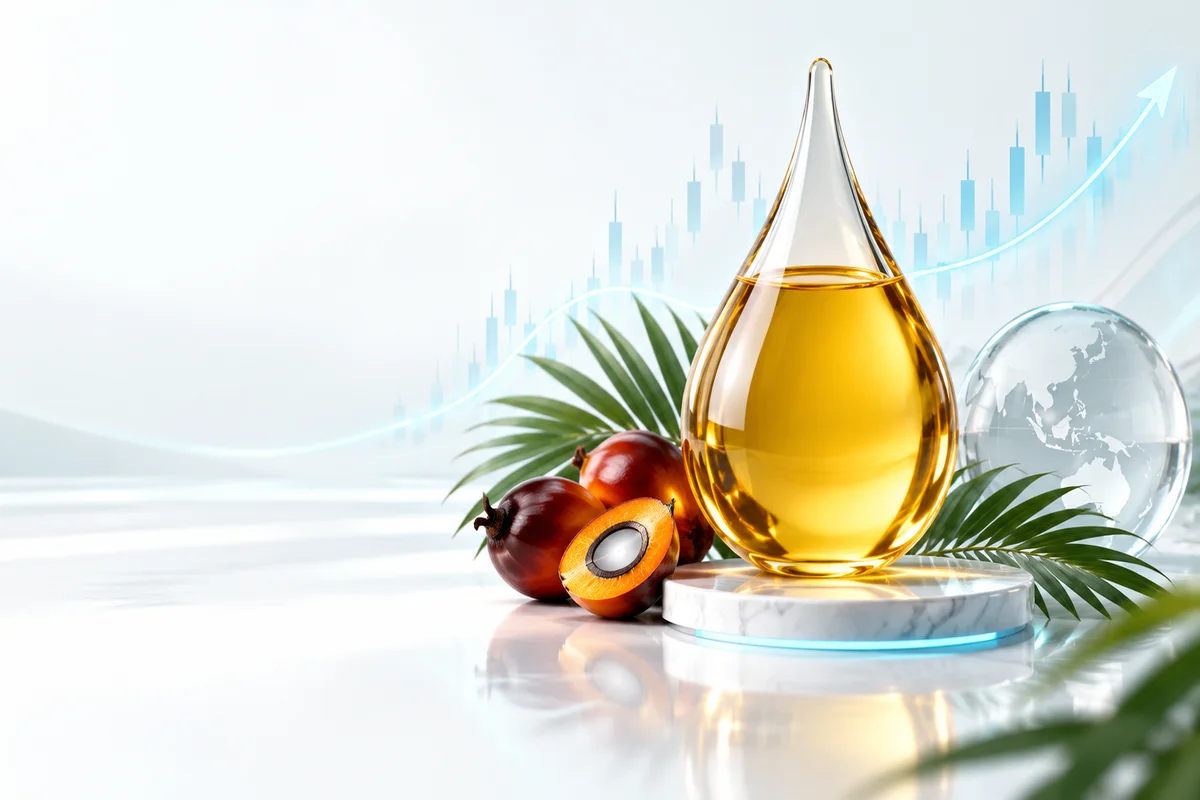
CPO (Crude Palm Oil) is a raw vegetable oil extracted from the flesh of oil palm fruit before it enters the refining stage. It is the foundation for cooking oil, margarine, biodiesel, soap, and cosmetics, which makes its price changes relevant beyond commodity traders.
Indonesia is the world's largest palm oil producer, so its output and export policy can alter global supply expectations quickly. This article explains how CPO works, what moves its price, the main risks, and practical ways to monitor the market.
Key Points
- Definition: CPO is crude palm oil extracted from palm fruit that has not gone through refining.
- Catalyst: Indonesia's B40 mandate and export rules are among the biggest drivers of CPO futures.
- Impact: CPO moves can influence food inflation, energy policy, and plantation company shares.
- Risk: Weather, European Union rules, and competing vegetable oils can trigger sharp price corrections.
- Strategy: Track benchmark futures and monthly export data to identify the market trend earlier.
What Is CPO?
CPO comes from the mesocarp, or pulpy part, of oil palm fruit. Fresh fruit bunches must be processed quickly to keep free fatty acid levels low. The resulting oil is still dark and contains impurities, so it cannot go straight into a cooking oil bottle.
Reading the CPO market is essentially a supply-demand exercise. The same skill applies when you explore other risk assets such as stock investing. Listed plantation companies often rise and fall with CPO price changes.
CPO Is Not Cooking Oil: Know the Derivative Products
Many beginners confuse CPO with bottled cooking oil. Packaged cooking oil is usually made from RBD palm olein, not from the crude oil directly.
• CPO: unprocessed palm oil with high free fatty acid content and dark color.
• RBD Palm Olein: refined, bleached, and deodorized oil that becomes the main component of frying oil.
• PFAD: a processing by-product commonly used in soap and oleochemical products.
• Palm Kernel Oil: extracted from the palm seed, not from the flesh that produces CPO.
The distinction matters because CPO prices do not always move in line with retail cooking oil. If you want to study how global input costs hit listed companies, you can also look at US stocks.
How the CPO Supply Chain Works
The CPO supply chain starts on plantations and ends at a refinery or export vessel. The following stages explain why production data is so important for price direction.
1. Harvesting: Workers cut fresh fruit bunches when oil content reaches its peak.
2. Transport: Bunches must reach the mill within 24 hours to limit free fatty acid buildup.
3. Extraction: Bunches are steamed and pressed to separate crude oil from fiber and nuts.
4. Storage: CPO sits in storage tanks before being delivered to refineries or overseas buyers.
5. Refining: Some CPO is sold directly, while the rest becomes olein for food and industrial uses.
Every stage carries cost and operational risk. News about production, logistics disruptions, or changes in export contracts can therefore move prices quickly.
Five Main Drivers of CPO Prices
CPO prices are not driven by a single factor. These five variables are the most common sources of market bias.
• Biodiesel mandate: In January 2025, Indonesia's Energy Ministry targeted around 15.6 million kiloliters of biodiesel under B40, increasing domestic CPO absorption.
• Weather and supply: Indonesia and Malaysia dominate global output, so El Nino or La Nina can change production expectations.
• Export policy: Indonesian export duties and levies can slow or accelerate the flow of CPO leaving the country.
• Competing vegetable oils: CPO competes with soybean, rapeseed, and sunflower oil because buyers can substitute among them.
• Global regulation: The European Commission phased in EUDR, with full obligations for large companies starting December 30, 2025.
Because several drivers can hit at the same time, CPO charts often show sharp gaps. Risk management still matters the same way it does in volatile assets, so you might start by studying crypto trading.
CPO Market Outlook into 2026
No one can predict prices with certainty, but market direction can still be read from these catalysts.
• Concentrated production: According to the USDA Oilseeds report for 2024/2025, Indonesia and Malaysia together supply about 85 percent of the world's palm oil.
• B40 demand: The continuation of B40 keeps domestic CPO demand relatively strong through 2026.
• Indonesian exports: GAPKI said Indonesian palm oil exports were around 34 million tons in 2024, so monthly inventory data remains a market signal.
• EUDR certification: Large operators must prove their land is deforestation-free from the end of 2025, which could limit exports if compliance is slow.
CPO is only one part of global investable markets. To compare its scale with other asset classes, check this overview of major assets.
Why CPO Prices Matter for the Economy and Investments
CPO is consumed across food, energy, and industrial products, so its price changes are not just a trader concern.
1. Food inflation: Higher CPO can lift cooking oil and processed food prices.
2. Energy mix: CPO is a feedstock for biodiesel, which ties commodity prices to national energy policy.
3. Stock market sentiment: Plantation, consumer goods, and logistics stocks react to CPO changes in different ways.
Investors can use CPO data as an extra confirmation before analyzing company fundamentals. You do not need to trade futures to learn the skill, because many instruments have different risk profiles.
Main Risks to Understand
CPO risk is not only about price corrections. It also involves regulatory uncertainty, operational quality, and substitution pressure.
• Price risk: Futures can swing sharply when stock reports are released. Set a fixed risk limit before entering any position.
• Regulatory risk: EU buyers may slow purchases when EUDR compliance is unclear. Track official deadlines rather than rumors.
• Operational risk: Delayed palm fruit raises free fatty acids and lowers the price a mill receives. Use sources that report fresh fruit quality.
• Substitution risk: Falling soybean oil prices can make CPO less competitive. Monitor the spread between vegetable oils regularly.
No single risk can be fully removed. Mitigation is about keeping decisions tied to data instead of assumptions.
Summary Table: CPO Opportunity and Risk
The table below helps balance the signals when you follow the CPO market.
Practical Ways to Track CPO Prices
You do not need to read every piece of news every day. A few disciplined sources are already enough.
1. Futures benchmark: Watch FCPO on Bursa Malaysia Derivatives, the main regional reference.
2. Inventory reports: Read monthly GAPKI data focused on production, local use, and closing stocks.
3. Export data: Check monthly shipment volumes for clues about logistics or demand shifts.
4. Domestic prices: Fresh fruit bunch prices and retail cooking oil can give early signals.
5. Policy news: Follow B40 implementation and changes in export tax from official sources.
The discipline of using data also applies to digital asset markets, where investors use on-chain analysis to verify network activity.
If you want to practice using charts and trading interfaces, explore the Mobee tutorial.
Conclusion
CPO is a strategic commodity that connects agriculture, energy, and financial markets. Its price is shaped by biodiesel mandates, weather, export policy, and competing vegetable oils. Beginners should focus on inventory data, benchmark futures, and regulatory risk before deciding to trade or invest.
FAQ
Start with Mobee
Mobee is a digital asset platform licensed and supervised by OJK, helping users explore crypto and investment products with clearer access and practical learning. Start your investment journey through Mobee and choose products that match your goals and risk profile.