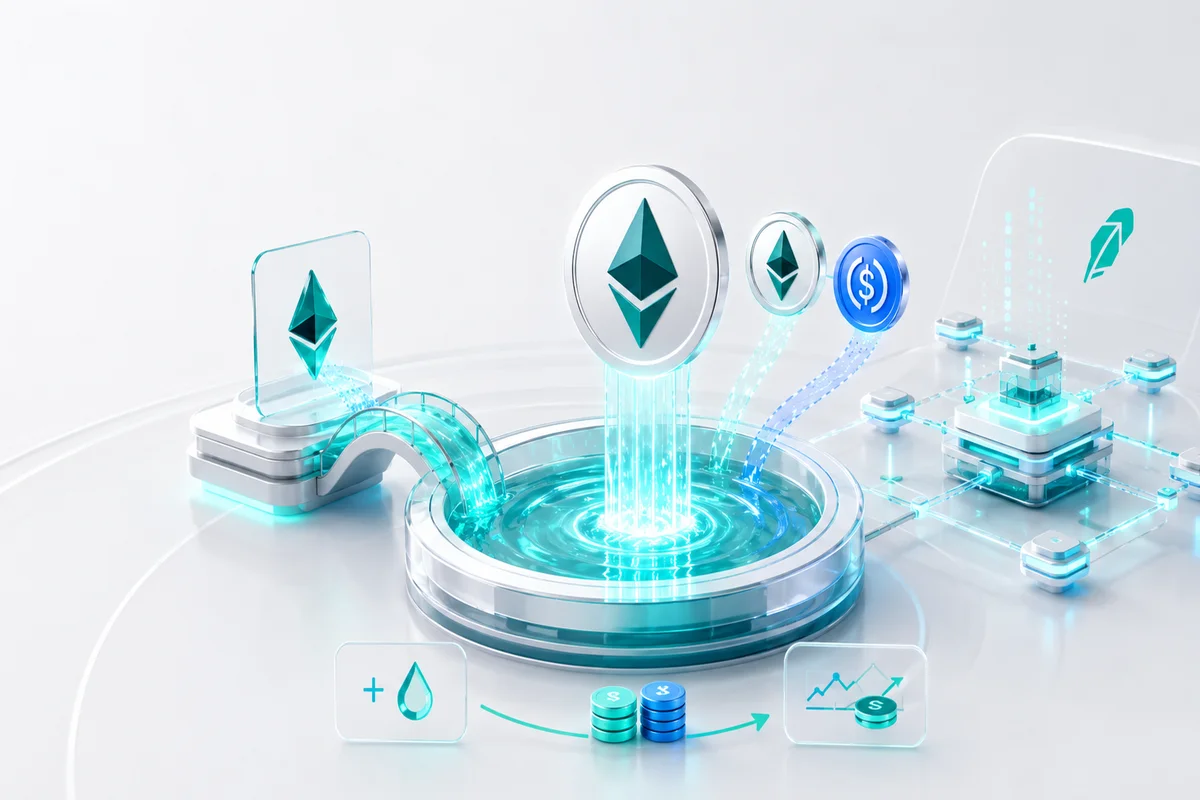
Robinhood Chain has become an exciting development in the crypto world by bringing the concept of tokenized assets to a blockchain network that operates 24/7. This network went live in July 2026 as an Ethereum Layer-2 based on Arbitrum technology, with DeFi partners like Uniswap active from day one.
In its first week, Robinhood Chain immediately grabbed attention. Token Terminal recorded nearly US$250 million in tracked liquidity on the network, including approximately US$70 million in ETH bridged from Ethereum and US$178 million in USDG stablecoin.
These figures highlight one important thing: the Robinhood Chain ecosystem doesn't just need users to trade, it also needs liquidity. This is where the role of Liquidity Providers, or LPs, becomes crucial.
However, before becoming an LP, users need to understand how liquidity pools work, why ETH is required, how fees are earned, and what risks to watch out for. Because while it may look attractive, being an LP is not a risk-free strategy.
Key Points
- Robinhood Chain is an Ethereum Layer-2 based on Arbitrum that went live in July 2026.
- The network is designed for tokenized real-world assets, including stock tokens and 24/7 DeFi activity.
- ETH is a vital asset as it is used for gas fees, bridging, swaps, and liquidity pools.
- Being a Liquidity Provider means supplying assets to a pool so that other users can perform swaps.
- LPs have the potential to earn transaction fees, but they still face risks such as impermanent loss, volatility, and smart contract risk.
- Users can start by purchasing ETH on Mobee before sending it to an EVM wallet and bridging it to the Robinhood Chain.
What Is a Liquidity Provider on Robinhood Chain?
A Liquidity Provider is a user who supplies assets into a liquidity pool. These pools are used by other users to perform swaps, buy tokenized assets, or interact with DeFi protocols.
For example, if there is an ETH/USDC pool on a DEX, then LPs need to provide both ETH and USDC to that pool. When other users swap ETH for USDC or vice versa, those transactions utilize the liquidity from the pool.
In return, LPs have the potential to earn a share of trading fees. The higher the transaction volume in the pool, the greater the potential fees that can be collected. However, actual returns depend on volume, pool composition, protocol fees, and asset price fluctuations.
On the Robinhood Chain, the LP concept becomes compelling because the network is designed for an ecosystem of tokenized real-world assets. This means liquidity pools are not limited to crypto assets like ETH and stablecoins, but can potentially be linked to stock tokens or other tokenized assets.
Why Does Robinhood Chain Need High Liquidity?
Liquidity is the primary foundation of the DeFi ecosystem. Without sufficient liquidity, users may experience significant slippage, swap prices become inefficient, and trading activity struggles to grow.
Robinhood Chain is uniquely positioned by bridging traditional worlds, such as tokenized stocks, with on-chain infrastructure. Tokenized assets can be traded more flexibly, but they still require a liquid market so that users can enter and exit positions more efficiently.
Liquidity is required for several key activities:
- Swapping between assets such as ETH, stablecoins, and tokenized assets.
- Lending and borrowing using tokenized assets as collateral.
- DEX activities such as Uniswap, Lighter, or other protocols available on the network.
- 24/7 trading, which requires active pools outside of traditional market hours.
- Price efficiency to ensure users do not incur excessive slippage.
Therefore, LPs act as liquidity providers within the Robinhood Chain ecosystem. Without LPs, DeFi activities cannot function optimally.
Why Is ETH the Initial Capital for LPs on Robinhood Chain?
ETH is a vital asset on Robinhood Chain because the network is an Ethereum Layer-2. Robinhood Chain runs on the Ethereum ecosystem and uses ETH as the gas token for various on-chain activities. Robinhood Chain also recorded over US$70 million in ETH bridged within its first week.
ETH is required for several purposes:
1. Gas Fees
Every transaction on Robinhood Chain requires ETH. This includes swaps, token approvals, adding liquidity, removing liquidity, bridging, and claiming fees.
2. Bridge Assets
To move assets from the Ethereum mainnet to the Robinhood Chain, users need to bridge them. ETH is one of the primary assets bridged to this network.
3. Liquidity Pair
Many DeFi pools use ETH as one side of a pair, such as ETH/USDC or ETH/stock token. To participate in these pools, users need to have ETH ready.
4. Advanced DeFi Activities
Beyond liquidity provision, ETH can also be used for other activities such as lending, collateral, and swapping between assets.
In other words, ETH is not just an investment asset, but also the "operational fuel" for using the Robinhood Chain.
How LP Works: From ETH to Liquidity Pool
The process of becoming an LP on the Robinhood Chain can generally be divided into several stages.
1. Preparing ETH
The first step is to acquire ETH. Users can purchase ETH on Mobee using Rupiah, then send it to a compatible EVM wallet.
2. Sending ETH to an EVM Wallet
After purchasing ETH, users need to send it to a wallet that supports the EVM network. This wallet will be used to receive ETH on the Robinhood network. To add the Robinhood network, you can check here: https://docs.robinhood.com/chain/add-network-to-wallet/
Ensure the wallet address is correct, the network is accurate, and the transaction amount has been verified before withdrawing.
3. Choose a Liquidity Pool
Once ETH is available on the Robinhood Chain, users can select a liquidity pool. The chosen pool should align with your risk profile.
Examples of pools that may be available:
- ETH/USDC
- ETH/USDG
- ETH/stock token
- Stablecoin pair
- Specific tokenized asset pair
Pools with volatile assets typically offer higher fee potential, but also carry a greater risk of impermanent loss.
4. Add Liquidity
When adding liquidity, users deposit assets into a pool. In many pools, users are required to provide two assets of equal value, for example, 50% ETH and 50% USDC.
Once liquidity is added, users receive an LP position representing their ownership in that pool.
5. Monitor Fees and Risks
LPs can earn fees from trading activity in the pool. However, the value of an LP position can fluctuate based on the prices of the assets within the pool.
Therefore, LPs need to monitor:
- Pool trading volume
- Accumulated fees
- ETH price changes
- Asset ratios within the pool
- Potential impermanent loss
- Smart contract risks
- Liquidity inflows and outflows from the pool
A Simple Example of Becoming an LP
For instance, suppose you want to become an LP in an ETH/USDC pool.
You prepare:
- US$500 worth of ETH
- US$500 worth of USDC
The total liquidity you provided is US$1,000.
If the pool is actively used by traders, you have the potential to earn a share of the trading fees. However, if the price of ETH rises or falls sharply against USDC, the asset composition in the pool will change. This is what can lead to impermanent loss.
This means that even if you earn fees, the final result may not necessarily be higher than simply holding ETH and USDC separately. Therefore, LPing should be approached as a strategy, not just a passive way to earn yield.
Key Risks of Being a Liquidity Provider
Being an LP can be attractive, but it comes with significant risks. Some of the main risks you need to understand include:
1. Impermanent Loss
Impermanent loss occurs when the price of the assets in the pool deviates significantly from the initial ratio at the time of your deposit. The greater the price change, the higher the potential difference in value compared to simply holding the assets.
This risk is particularly critical for pools involving volatile assets like ETH or tokenized stocks.
2. Smart Contract Risk
LPs use DeFi protocols. If there are bugs, exploits, or errors in the smart contract, the funds in the pool could be at risk.
Therefore, it is important to choose protocols with a good reputation, security audits, and transparent on-chain activity.
3. Liquidity Risk
Not all pools have healthy volume. Pools with low volume may generate small fees and make it difficult to exit at an efficient price.
Before entering, check the pool's volume, TVL, and activity.
4. ETH Price Risk
Since ETH is a primary asset, changes in the price of ETH can significantly affect the value of your LP position. If ETH drops sharply, the value of your LP portfolio may also decline.
5. New Ecosystem Risk
The Robinhood Chain is still very new. Ecosystems that have just gone live usually have high growth potential, but they also carry technical, adoption, and liquidity risks that are not yet stable.
When Should You Become an LP?
There is no single perfect time to become an LP. However, there are several conditions you should consider:
- You already understand how wallets, bridges, and DeFi work.
- The pool has sufficiently active transaction volume.
- The fees generated are worth the risk of impermanent loss.
- You understand the characteristics of the assets in the pool.
- You are not putting all your capital into a single pool.
- You are prepared for price volatility.
If you are still hesitant, it is better to start with a small amount to understand the process first.
Buy ETH on Mobee as a First Step
Before becoming an LP on the Robinhood Chain, you need to prepare some ETH. On Mobee, you can buy ETH using Rupiah and then send it to an EVM wallet to use within the on-chain ecosystem.
The process is simple:
With this step, Mobee can serve as a starting point for users who want to explore the Robinhood Chain and LP opportunities on the new network.
Not Ready to be an LP? Accumulate ETH First
If you are not ready to become an LP, you do not have to jump into a pool right away. You can prepare your ETH first while monitoring the development of the Robinhood Chain.
Some things you can do:
- Monitor TVL and DEX volume.
- Study the available pools.
- Understand the risks of impermanent loss.
- Try small transactions first.
- Accumulate ETH gradually.
With this approach, you can enter the Robinhood Chain ecosystem more strategically, rather than just following the initial hype.
You can also save your LP earnings by depositing ETH from your Robinhood account directly into Mobee, and maximize your returns by using Flexi Earn ETH on Mobee.
Conclusion
Robinhood Chain opens up new opportunities for users looking to explore DeFi, tokenized assets, and liquidity pools on the Ethereum Layer-2 network. With the ecosystem becoming active from the very first week, the demand for liquidity has become a key factor in the network's growth.
However, being a Liquidity Provider is more than just depositing assets and waiting for fees. Users need to understand how pools work, the role of ETH, the risks of impermanent loss, smart contract risks, and price volatility.
FAQ
If you are interested in exploring Robinhood Chain, the first step is to prepare your ETH. You can start by purchasing ETH on Mobee, then learning about the wallets, bridges, and available DeFi protocols before officially becoming an LP.