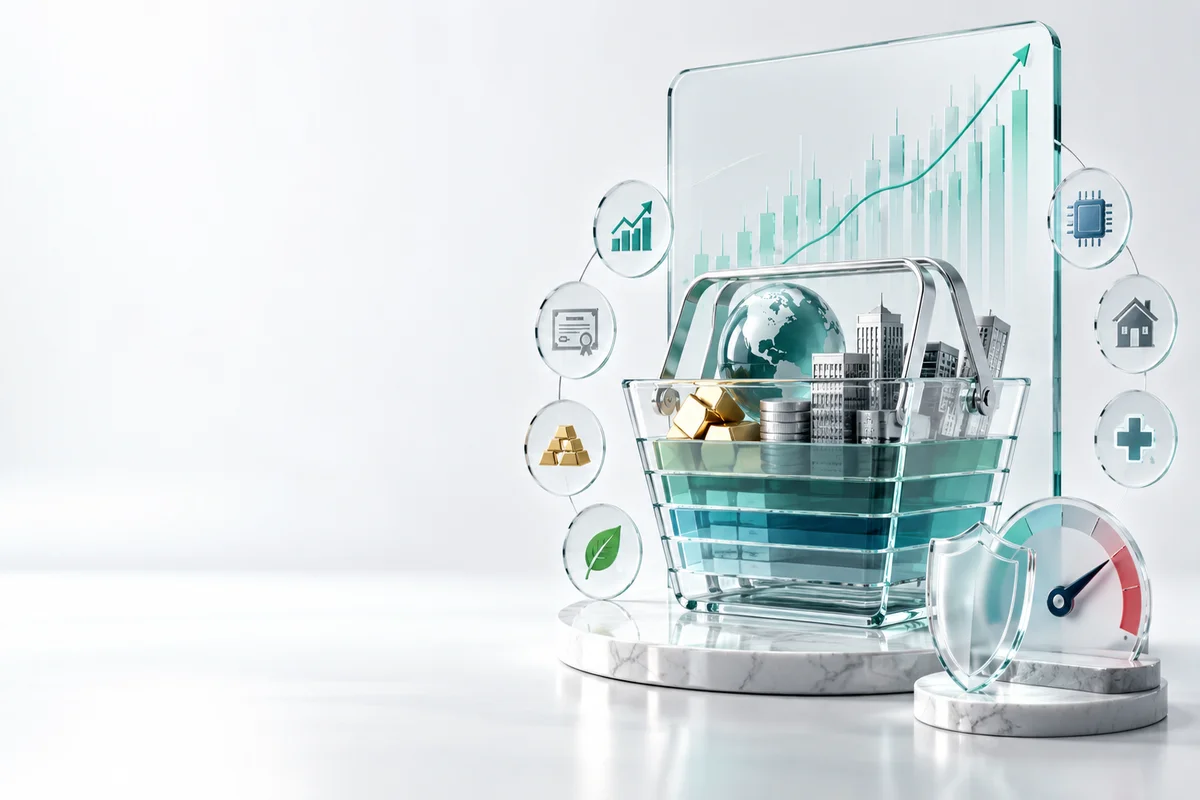
An ETF is an exchange traded fund, a basket of securities that trades on a stock exchange like a stock and typically tracks an index, commodity, or sector. In 2026, ETFs remain popular because they offer instant diversification, intraday liquidity, and generally lower fees than active mutual funds, making them useful for beginners who want to start small.
You can buy them through a brokerage account, and some platforms also offer crypto-linked products, so compare the basics through crypto ETFs before choosing a product.
Key Points
- Core definition: An ETF is a listed basket of assets that trades like a stock.
- How it works: Market makers create and redeem ETF shares to keep prices close to net asset value.
- Main benefit: Instant diversification with typically lower expense ratios than active funds.
- Key risk: Market losses, tracking error, liquidity gaps, and currency swings can reduce returns.
- Beginner move: Screen for liquidity, low fees, and clear holdings before placing a trade.
Benefits of Investing on ETF
An ETF pools investor money to buy a portfolio of assets. Its shares trade on an exchange throughout the day, so you can buy or sell at market prices. This structure makes ETFs a practical tool for both long-term investors and tactical traders, and you can see examples through gold ETFs.
• Diversification: One share can give exposure to hundreds of stocks or bonds.
• Liquidity: Large ETFs trade millions of shares daily.
• Transparency: Holdings are usually published each day.
• Flexibility: ETFs can be bought, sold, or held in a brokerage account.
• Accessibility: Some ETFs track niche sectors like AI or clean energy.
How ETF Creation and Redemption Works
ETF prices stay close to the value of their underlying assets through an arbitrage mechanism. Authorized participants create new ETF shares when demand is high and redeem them when supply exceeds demand. A common index example is explained through QQQ ETF.
1. An investor places a buy order through a broker or platform.
2. A market maker assembles the underlying securities and delivers them to the ETF issuer.
3. The issuer creates new ETF shares and gives them to the market maker.
4. The market maker sells those shares on the exchange to meet investor demand.
5. When redemptions happen, the process reverses and shares are destroyed.
Main ETF Categories in 2026
By 2026, ETF categories have expanded beyond plain vanilla equity funds. Investors can choose bond, commodity, crypto, and thematic ETFs. According to ETFGI in February 2026, global ETF assets reached an estimated US$16 trillion, a figure that shows how central ETFs have become for institutional and retail portfolios.
• Equity ETFs: Track indexes such as S&P 500 or Nasdaq 100.
• Bond ETFs: Hold government or corporate debt with different maturities.
• Commodity ETFs: Often track gold or silver for inflation protection.
• Crypto ETFs: Track Bitcoin or Ethereum with high volatility.
• Thematic ETFs: Focus on AI, semiconductors, or renewable energy.
Benefits for Beginners
Beginners often use ETFs to build a diversified core portfolio without picking individual stocks. The main appeal is low cost, transparency, and ease of trading. You can learn more about single stocks through US stocks before comparing them with ETFs.
• Low fees: Vanguard's 2026 outlook puts broad US equity ETF expense ratios at 0.03%-0.20%.
• Instant diversification: A single ETF can hold hundreds of securities.
• High liquidity: SPY averaged around 80 million shares per day in Q1 2026.
• Transparency: Daily holdings let you see exactly what you own.
• Flexibility: You can trade during market hours and use limit orders.
Costs, Risks, and Tracking Error
ETFs are not risk-free. Market downturns, tracking error, and liquidity gaps can hurt returns, especially in narrow thematic funds. Review your allocation through investment portfolio to avoid concentration risk.
• Market risk: Broad equity ETFs can fall 20%-50% in severe bear markets.
• Tracking error: Fees or sampling can make ETF returns differ from the index.
• Liquidity risk: Low-volume ETFs may have wide bid-ask spreads.
• Currency risk: International ETFs expose you to foreign exchange moves.
• Regulatory risk: Tax rules and trading access can change by country.
ETF vs Mutual Fund vs Stock
ETFs, mutual funds, and stocks serve different investor needs. ETFs offer intraday trading and low costs, mutual funds offer automated investing, and stocks offer full control. Use a beginner investing guide if you are still choosing your first product.
• ETF: Trades real time, low expense ratio, transparent holdings.
• Mutual fund: Priced once daily, managed professionally, easy for beginners.
• Stock: Full control, but concentration risk is higher.
• Liquidity: Large ETFs and blue-chip stocks are liquid, mutual funds follow NAV.
• Cost: ETFs charge expense ratios, stocks charge commissions, mutual funds charge management fees.
How to Screen Your First ETF
Screening an ETF takes more than looking at past returns. Focus on liquidity, cost, holdings, and fit with your goals. Based on OJK data as of March 2026, ETFs in Indonesia are classified as mutual funds and supervised as capital market products, so you should verify registration.
1. Define your goal: Decide whether you need growth, income, or capital preservation.
2. Check the underlying index: Make sure you understand what the ETF tracks.
3. Compare expense ratios: Look for broad index ETFs below 0.50%.
4. Review liquidity: Check average daily volume and bid-ask spread.
5. Understand taxes: Know dividend, capital gains, and local tax rules.
6. Start small: Buy in stages and review performance quarterly.
Quick ETF Comparison Table
AspectETFMutual FundStockTradingReal time on exchangeOnce daily at NAVReal time on exchangeDiversificationHigh, one tradeHighLow, single companyCostLow expense ratioManagement feeBroker commissionLiquidityDepends on ETF volumeFollows NAVDepends on stockBest forPassive and active investorsAutomated beginnersActive investors
This table shows ETFs offer a balance between diversification and flexibility. Still, you must check volume and fees before buying.
Monitoring Strategy for 2026
After buying, monitor ETFs periodically. Focus on holdings changes, fees, macroeconomic conditions, and inflows. According to BlackRock's Q1 2026 report, iShares AUM was about US$4.2 trillion, a sign that large ETF providers benefit from liquidity and economies of scale.
• Macro catalysts: Fed rate decisions and US inflation affect bond and equity ETFs.
• Sector catalysts: Earnings from mega-cap companies can move index ETFs.
• Product catalysts: New ETF launches and fund flows affect liquidity.
• Regulatory catalysts: Crypto ETF rules and local tax policies can change.
• Liquidity: Daily volume and spreads show ETF health.
• Timeline: Review monthly and rebalance quarterly.
Conclusion
ETFs are efficient tools for diversification, but they are not risk-free. Choose liquid, low-cost funds that match your goals. Start small, track allocation, and review regularly. With discipline, ETFs can serve as a core building block for a long-term portfolio.
FAQ
What is an ETF in simple terms?
An ETF is a basket of assets that trades on an exchange like a stock. Its price moves during market hours and usually tracks an index, commodity, or sector. For example, an S&P 500 ETF holds shares of large US companies.
Are ETFs better than mutual funds?
Not always. ETFs often win on lower fees and intraday trading, while mutual funds can be better for automated investing. Choose based on your goals and comfort.
What is the average ETF expense ratio?
According to Vanguard's 2026 outlook, broad US equity ETFs range from 0.03% to 0.20%. Thematic or crypto ETFs can charge 0.50% to 1.50%. Always check the prospectus.
Are ETFs safe for beginners?
They are relatively easier because of diversification, but they still carry market risk. Start with large, liquid index ETFs and learn about holdings and taxes.
Can I buy crypto ETFs in 2026?
Some markets offer crypto ETFs, but availability and rules vary. Verify platform legality, custody, and tax treatment before buying. In Indonesia, check whether the product is approved for local distribution.
Start with Mobee
Mobee is a digital asset platform licensed and supervised by OJK, helping users explore crypto and investment products with clearer access and practical learning. Start your investment journey through Mobee and choose products that match your goals and risk profile.