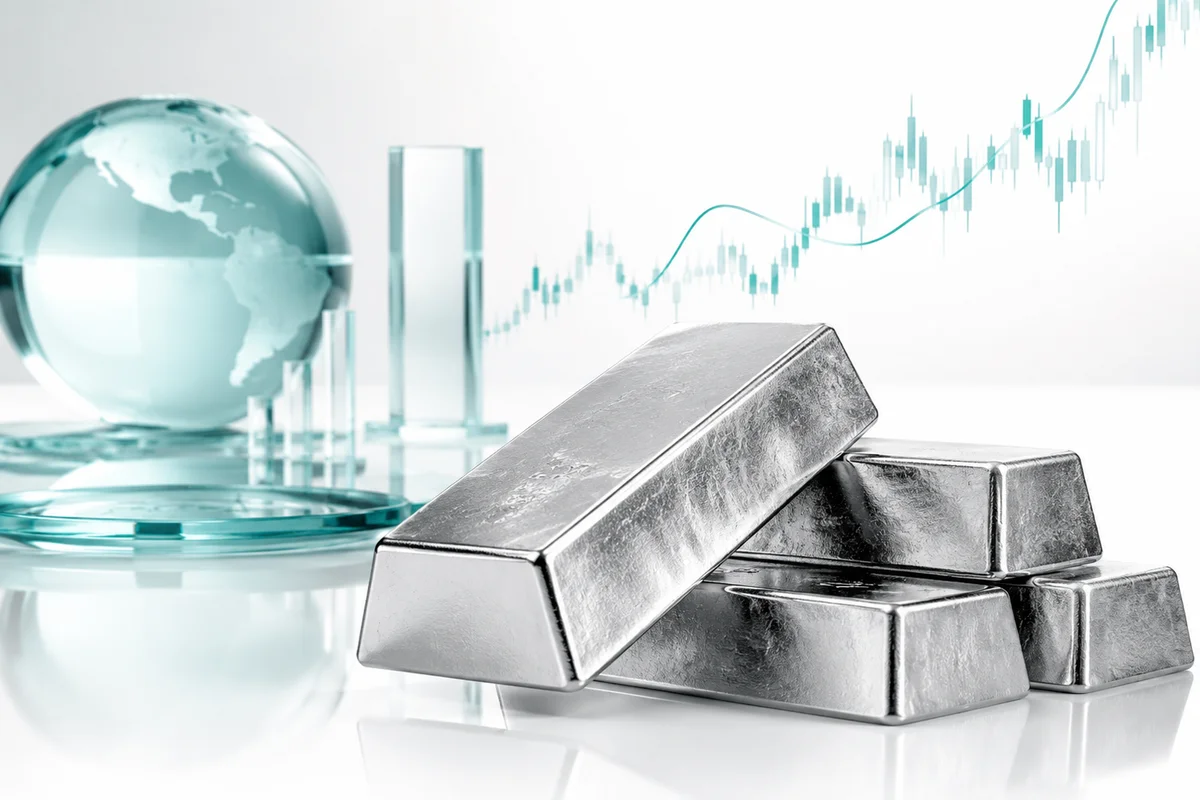
Palladium is a silvery-white precious metal used mainly in vehicle catalytic converters, electronics, jewelry, and investment products. Unlike gold, which is widely known as a store of value, palladium has a smaller market, more volatile price, and a supply chain heavily concentrated in Russia and South Africa.
Automotive catalysts account for the largest share of demand because the metal helps convert toxic exhaust gases into safer substances. For investors, understanding how palladium is priced and where its risks sit is the first step before buying this metal.
Key Points
- Definition: Palladium is an industrial precious metal that can also serve as an investment asset.
- Supply: Around 80% of global mine production comes from Russia and South Africa.
- Demand: More than 70% of consumption goes into vehicle catalysts.
- Price: The metal is highly sensitive to economic cycles and EV transition.
- Risk: High volatility and lower liquidity compared with gold.
How Palladium Works as an Investment Asset
Investors can gain exposure to palladium through physical bullion, futures contracts, ETFs, or tokenized products. Reference prices usually come from the London spot market, COMEX in the United States, and the Shanghai exchange. Unlike gold, which has a deep retail market, palladium is traded more by institutions and industrial players. Before buying, it is important to understand how to identify authentic precious metals to avoid fraud.
• Physical: Coins, bars, or jewelry with storage costs.
• Futures and ETFs: A way to gain price exposure without storing the metal.
• Tokenization: Digital products that represent ownership of metal or a metal index.
Main Industrial Functions of Palladium
The biggest role of palladium is as a catalyst in vehicles. The metal helps convert exhaust gases such as carbon monoxide and nitrogen oxides into safer compounds. According to the Johnson Matthey PGM Market Review released in November 2025, automotive catalysts still account for around 80% of total PGM demand.
• Automotive: Catalytic converters for gasoline and hybrid cars.
• Electronics: Conductive layers in ceramic capacitors.
• Healthcare: Dental filling materials and medical instruments.
• Jewelry: Mixed with white gold to increase hardness.
Key Drivers of Palladium Prices
Palladium prices do not move alone. Based on Heraeus Precious Metals data as of March 2026, spot palladium traded near $940 per ounce, well below its 2021 peak. Several big factors need to be tracked to understand the direction. You can also compare this with token gold if you want to understand metal tokenization.
• Russia supply: Sanctions, export taxes, or mining disruptions can trigger price spikes.
• Global car sales: More gasoline cars sold means higher catalyst demand.
• EV transition: Electric vehicles do not use PGM catalysts, changing the long-term outlook.
• Interest rates and US dollar: A stronger dollar tends to pressure precious metals.
• Speculative positioning: Hedge funds on COMEX can make prices move faster than fundamentals.
How to Buy and Store Palladium
For beginners, the most important step is to choose the instrument and understand costs before entering. Do not buy physical metal immediately if liquidity and safe storage are not ready. If you want an alternative asset class, you can start learning about stock investing for diversification.
1. Choose the instrument: Decide between physical, ETF, futures, or token.
2. Check liquidity: Make sure the market volume is large enough for easy exit.
3. Calculate costs: Look at spreads, storage fees, and transaction charges.
4. Use a trusted platform: Select an exchange or dealer with clear licensing.
5. Set a risk limit: Allocate money that will not disturb your essential expenses.
Palladium vs Platinum vs Gold: A Quick Comparison
To understand palladium's position, compare it with platinum and gold by function, supply, and liquidity. You can also check the broader market context through largest assets as a reference.
Main Risks of Investing in Palladium
Palladium can deliver large gains, but its risks are also sharp. Based on COMEX data as of March 2026, open interest in palladium futures is much smaller than in gold, which means wider spreads and greater slippage. Here are the main risks investors face.
• Auto cycle: Falling global car sales can reduce demand. Monitor quarterly sales data from auto associations.
• EV transition: Electric vehicles do not use palladium-based catalysts. Faster EV adoption weakens the long-term price outlook.
• Supply concentration: Russia and South Africa dominate supply. Mine disruptions can cause violent price swings.
• Low liquidity: Palladium trading volume is much smaller than gold. This creates wider spreads and higher slippage risk.
• Excessive speculation: Short-term sentiment can override fundamentals. Avoid taking large positions just because of a trend.
Realistic Scenario and Diversification
For example, palladium may drop from around $1,100 to $900 per ounce because of news about faster EV production. If you hold a palladium ETF, that decline could mean a 15-20% loss in a short period. On the other hand, a Russian supply disruption could push prices up sharply within days. To understand alternative instruments, you can read about crypto types before entering digital assets.
• Do not buy the dip without data: Check car sales and catalyst production first.
• Limit allocation: Palladium should be a small part of a diversified portfolio.
• Combine with other assets: Stocks, metals, and digital assets can reduce concentration risk.
Conclusion
Palladium is a precious metal with a large industrial role, but it is not suitable for every investor. Its price reacts strongly to global auto conditions, Russian policy, and the US dollar. If you decide to enter, choose a liquid instrument, set a risk limit, and monitor car sales data regularly.
FAQ
Start with Mobee
Mobee is a digital asset platform licensed and supervised by OJK, helping users explore crypto and investment products with clearer access and practical learning. Start your investment journey through Mobee and choose products that match your goals and risk profile.